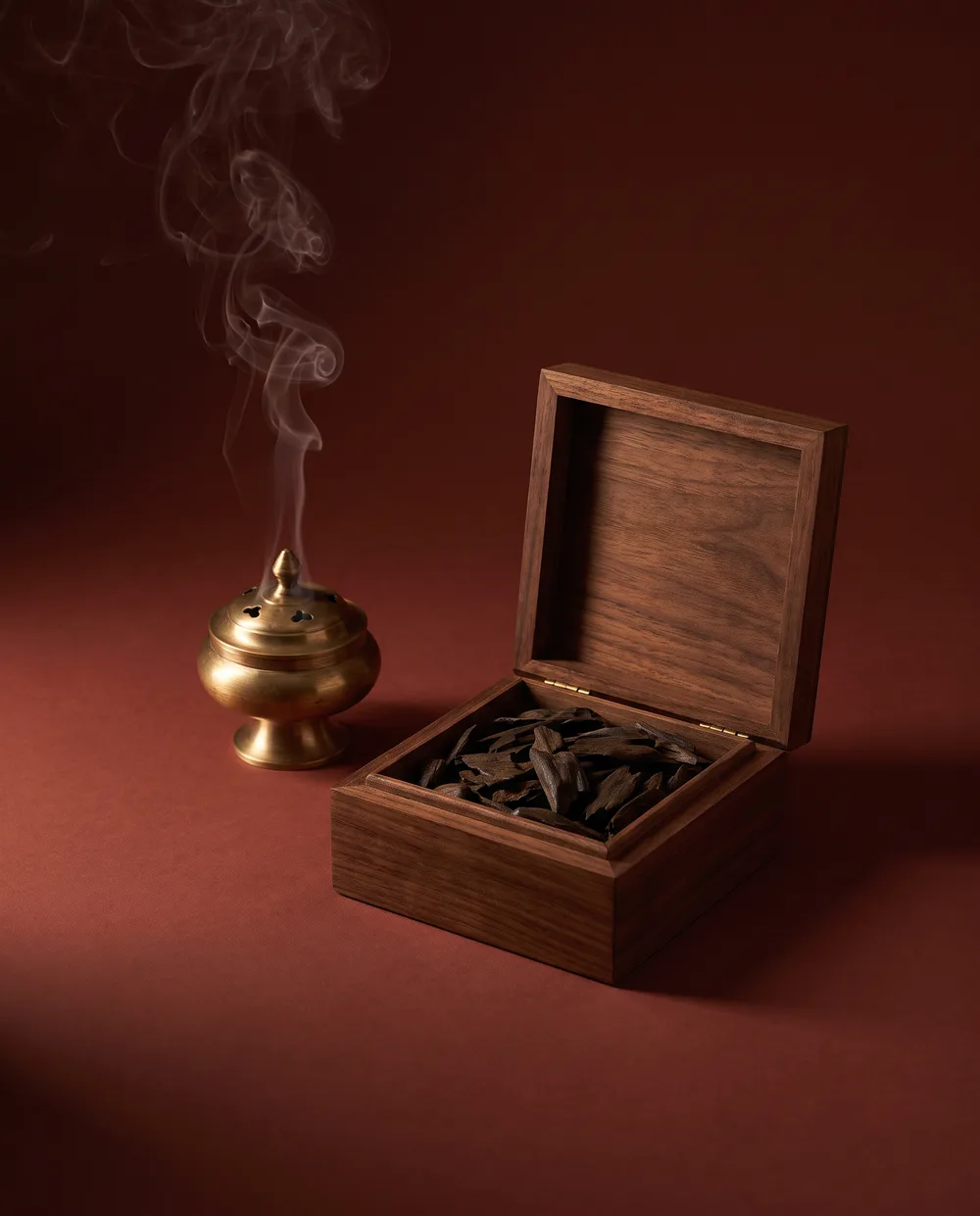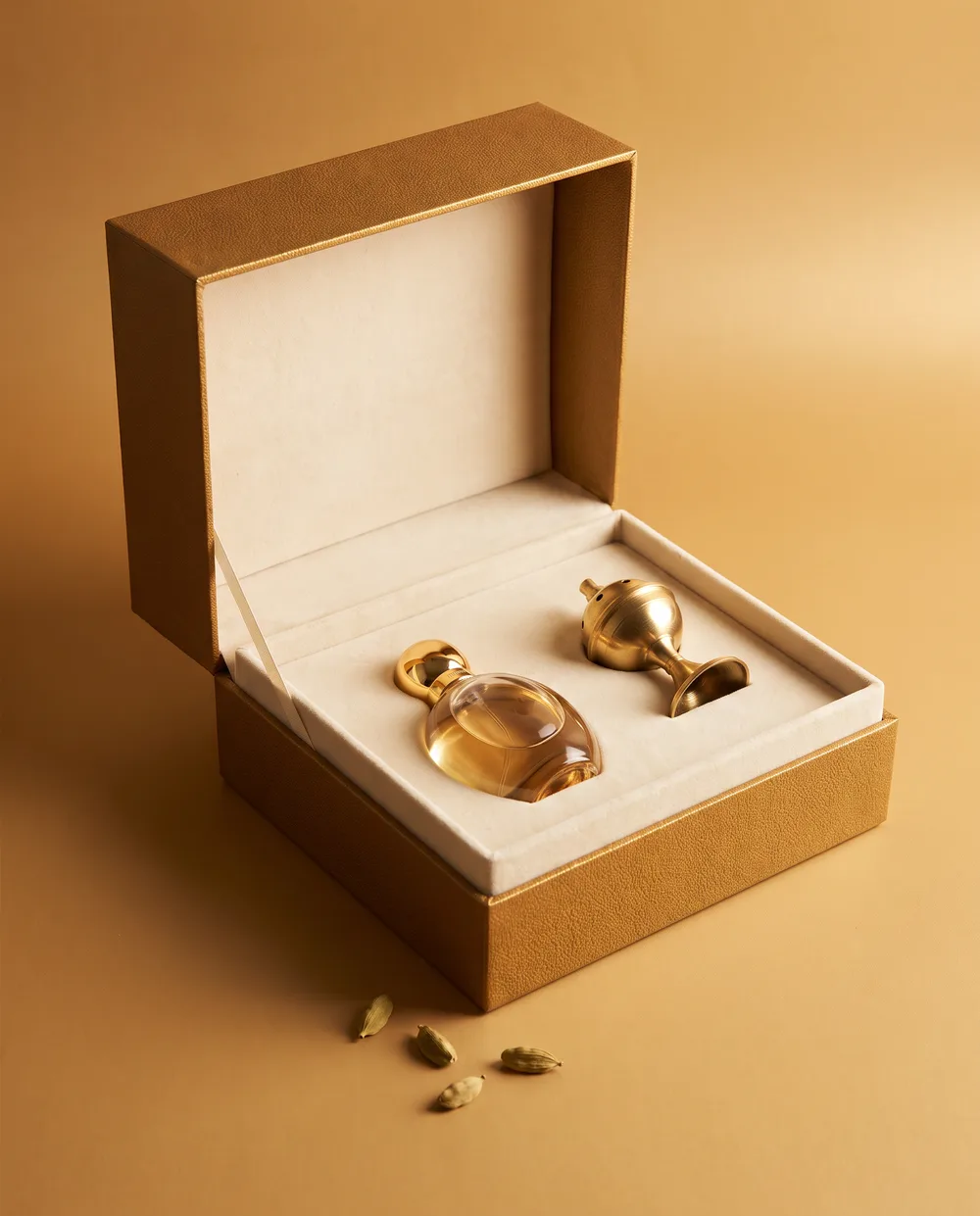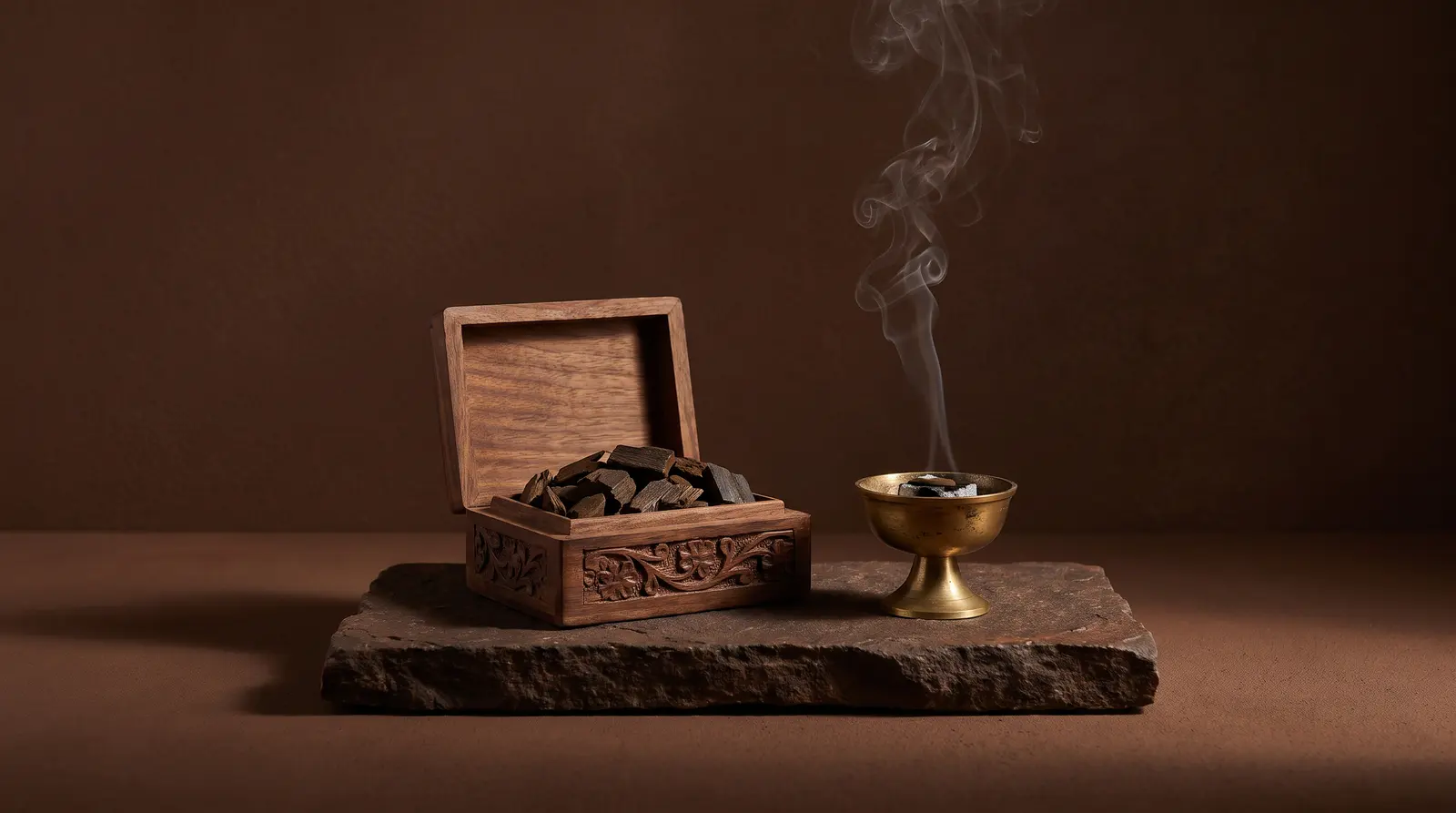
Bakhoor is scented wood or resin that you burn slowly so the smoke fills a room, a majlis or a thobe with fragrance. It is a long-standing way to welcome guests in the Gulf, and it is still part of daily life in many Saudi homes, especially on Fridays, at Eid and on Ramadan nights.
If you have never bought it, the names and tools can feel confusing. This bakhoor guide explains what it is, the main types, how to burn it safely, how much to use, and how to store it so it keeps its scent.
What is bakhoor?
Bakhoor is made from wood chips or small pastilles soaked in fragrance oils and resins. The base is usually agarwood (oud), sandalwood or a blend of both, and the oils can be oud oil, rose, musk, amber or other notes. Once the pieces are dry or semi-moist, they are ready to burn.
You burn bakhoor on a hot coal, or on an electric burner that heats it without a flame. Instead of burning quickly to ash, it releases a slow, fragrant smoke, which is why one small piece can scent a whole room.
The main types: oud chips, maamoul and dukhoon
Names overlap between shops and regions, so read the description if you are unsure. These are the most common types:
- Oud chips: small pieces of agarwood, sometimes scented with extra oil. The smell is deep, smoky and woody. Prices vary widely because the quality of the wood varies widely.
- Maamoul: wood soaked in rich oils and aromatic ingredients, so the pieces are dark, soft and slightly sticky. It gives a rich, sweet smoke quickly and is very common in homes and majlis.
- Dukhoon: a blend of sandalwood, resins, spices, musk and oils, often sold as a powder, a paste or small lumps. It usually smells sweeter and softer than plain oud and is often used for scenting clothes and the home.
What you need: charcoal and a mijmar, or an electric burner
The traditional setup is a mijmar or mabkhara (a metal or ceramic burner), quick-light charcoal, tongs and a heat-proof surface. You light the charcoal with a flame, place it in the burner, and wait until it is covered with a thin layer of grey ash. Only then do you put the bakhoor on top.
An electric burner is simpler: you set the bakhoor on the heated plate and switch it on. There is no flame and no sparks, so it suits apartments, offices and anyone who burns bakhoor every day. It usually gives a softer scent with less smoke.
How to burn bakhoor safely
Bakhoor is safe when you treat it like any open heat source. Never leave burning bakhoor unattended. Then follow these rules:
- Set the burner on a stable, heat-proof surface, never on wood, plastic or fabric.
- Light the charcoal with tongs near an open window or outdoors, because quick-light charcoal can throw sparks.
- Keep a window or door open while it burns, since charcoal gives off smoke and fumes.
- Do not go to sleep or leave the house while it is burning.
- Keep children and pets away, and keep curtains, sofas and paper well clear of the burner.
- Let the charcoal go out and cool completely before you throw away the ash.
- If anyone at home is sensitive to smoke, use less, ventilate more or switch to an electric burner.
How much bakhoor to use
Less than you think. For an average room, one small piece, about the size of a fingernail or a small coin, is usually enough. Start with one, wait a few minutes, and add another only if you want more. Thicker smoke is not better: it turns heavy and clings to fabric.
In a large majlis you might use two pieces, or burn a second round when guests arrive. A piece usually gives smoke for somewhere between 10 and 30 minutes, depending on the type and how hot the charcoal is.
Scenting clothes and the majlis
To scent a thobe, abaya or ghutra, hang it above the burner inside a small, closed space, such as a covered bakhoor stand or a closet you have kept shut for a few minutes. Keep the fabric well away from the hot coal and any sparks. Leave it for a few minutes, then air it briefly so the smoke settles. Test on an inexpensive item first, because resin smoke can mark pale fabric.
For the majlis, burn bakhoor shortly before guests arrive so the room feels warm, not smoky. In many homes the mabkhara goes around toward the end of a gathering as a gesture of hospitality. If you wear perfume over bakhoor-scented clothes, pick one from the same family, such as oud, amber or musk, so the two do not clash.
How to store bakhoor
Keep it in an airtight jar or tin, in a cool, dry place away from sun and heat. Give each type its own container, because a strong scent travels to its neighbours.
Seal maamoul well so it does not dry out, and keep charcoal separate and dry, because damp charcoal is hard to light. If it is your first purchase, start with a small pack and try the scent before you buy a large amount.
Key takeaways
- Bakhoor is wood or pastilles soaked in oils and resins, burned on charcoal or an electric burner.
- The main types are oud chips, maamoul and dukhoon, and names overlap between shops.
- Never leave it unattended, ventilate the room, and keep children and fabrics away.
- One small piece is enough for an average room, and more smoke only makes it heavy.
- Store it airtight in a cool, dry place, each type in its own container.
Frequently asked questions
What is the difference between oud and bakhoor?
Can I burn bakhoor without charcoal?
How long does a piece of bakhoor last?
Is it safe to burn bakhoor at home?
How do I scent my clothes with bakhoor?
We may earn a commission from partner shops at no extra cost to you.